Roma Capitale
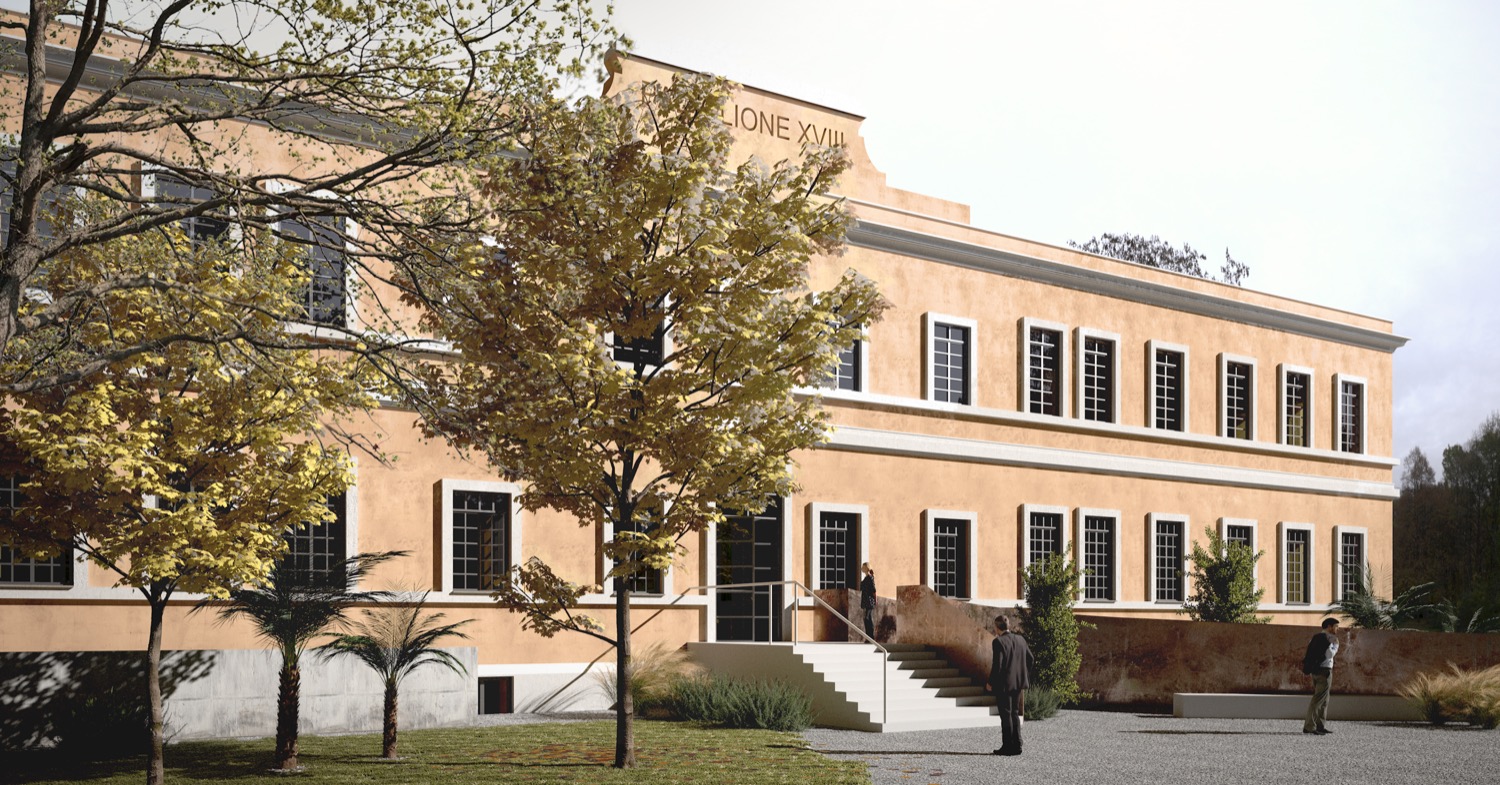
Render padiglione Santa Maria della Pietà

INCLUSION

Integrated Urban Plans: Santa Maria della Pietà - Works on the Pavilions of the Municipality

The integrated plan developed for Santa Maria della Pietà aims to create a Health and Well-being Park, which represents an articulated system of spaces and activities to enhance personal development. The project aims to promote social-work skills, healthy lifestyles and psychophysical well-being, embracing aspects such as nutrition education, entrepreneurship, legality, sport and exercise. The intervention will include actions that meet the need for space for personal care and provide an environment conducive to social welfare, training, entrepreneurial and workshop initiatives. These activities will complement those already present in the complex, supporting the recovery and revitalisation of the park and the existing pavilions. The design will develop and integrate different functions, responding to citizens' needs, with a focus on physical and psychological well-being, social care, sociality and inclusion. The services offered will support emerging businesses and the most vulnerable. The experimental approach and shared governance could be a model for other initiatives that promote collaboration between institutional, private, scientific and civic entities.

Roma Capitale
Sostenibilità

SUSTAINABILITY

Interventions on public housing buildings located in Via Sebastiano Satta and Piazza Balsamo Crivelli

Interventions mainly aim at improving energy efficiency of the buildings involved. More in depth, it is planned to replace or to renovate heating distribution systems within buildings, to reduce waste and optimise the energy consumption. The interventions will make buildings more energy-sustainable, hence contributing to reduce greenhouse gases and to improve the environmental footprint of the area. Energy efficiency interventions will bring many economic benefits, reducing heating and cooling costs in buildings.
The intervention is a relevant step towards the promotion of a more ecologically aware and environmentally responsible community. This can lead to a higher comfort and well-being for those who live in the public housing apartments mentioned above.

Roma Capitale
Centro archeologico monumentale - CARME

CULTURE

Archaeological Monumental Site (CARME) - Via dei Fori Imperiali area: pedestrianisation and redevelopment of Via dei Fori Imperiali

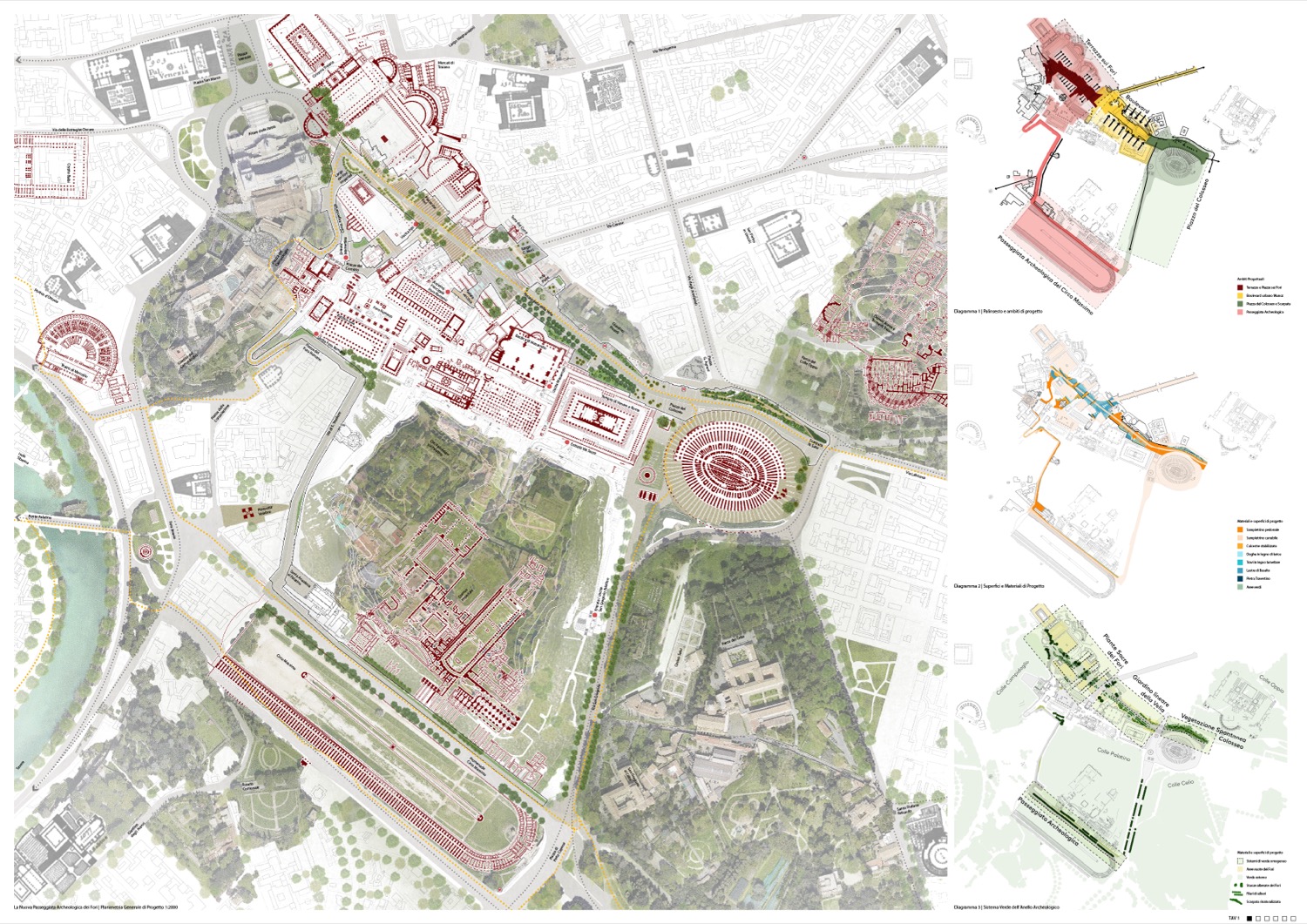
The intervention focuses on the redevelopment and pedestrianisation of Via dei Fori Imperiali with the aim of improving access to the archaeological and monumental areas. Dedicated spaces for pedestrians and cyclists have also been planned, along with the addition of urban furniture, informational elements, and viewpoints overlooking the archaeological sites. 

The aim of the new layout is to achieve a spatial, functional, and monumental integration between the contemporary level and the archaeological one, creating a new public space scene that is not only museum-like but also open to the city. The intervention aims also to restyle the landscape of Via dei Fori Imperiali and the surrounding areas that will contribute to create a unified and identifiable urban image. In relation to this aim, the design actions must: explore the possibility of creating new access routes to the urban itineraries open to the public and to the public squares located at the archaeological level; enable the hosting of various types of cultural events; promote a new arrangement of public space that enhances the panoramic views overlooking the archaeological area. 

Specifically, the intervention consists of the following works: surface improvements to the section of Via dei Fori Imperiali between the junction with Via Labicana and the Colosseo metro station on Line B (including the refurbishment of the road and pavements, adjustment/removal of the current traffic curbs, as well as redevelopment of the green area between Via Nicola Salvi and Via dei Fori Imperiali); refurbishment of the cobblestone paving in the pedestrian area adjacent to the Mamertine Prison and the church of Saints. Luca and Martina; interventions to increase the pedestrianisation of Via dei Fori Imperiali by setting up:

  • pedestrian and driveable stone pavements in travertine, basalt, cobblestones (without differences in height);
  • street furnishing equipment (overlooking and resting seats, balustrades, bollards, potted trees)
  •  street furnishing for events
  • a street and artistic lighting system capable of ensuring a new level of accessibility and safety during night hours, both along the street and within the archaeological area.

Roma Capitale
Cultura

CULTURE

Caput Mundi: Villa Sciarra – Artificial ruins

The interventions will include weeding, bush clearing and cleaning to rid the area of invasive weeds. Simultaneously, the stability of structures, surfaces and plastic decorative elements will be carefully checked in order to improve their appearance.
The activities will make the site available again.

Roma Capitale
Sostenibilità

SUSTAINABILITY

Removal of stumps and planting of new trees

The project aims to improve the streets and gardens of Roma Capitale by removing stumps and planting new trees. The aim is to eliminate potential risks to public safety, restore continuous tree plantings along the streets and improve the urban appearance by removing stumps from previous safety works. The activities will include the removal of stumps, the supply and planting of trees in accordance with the specifications, with a guarantee of rooting and maintenance every two years, as well as the restoration of any damage to verges, roads and pavements. All plant material supplied must comply with the requirements of point 4.2.2 of Annex 1 of the Italian Ministerial Decree of 10 March 2020, the so-called MEC or Minimum Environmental Criteria for the awarding of public green management contracts for the purchase of ornamental plants.

Roma Capitale
Sostenibilità

SUSTAINABILITY

Extraordinary maintenance of pavements on main roads: Consolidated City, City of Restructuring and City of Transformation

In view of the Jubilee 2025, Roma Capitale intends to implement various maintenance and upgrading works on the city pavements in order to improve pedestrian traffic and facilitate the movement of pilgrims and tourists. The intervention will focus on the main pavements, prioritising those that connect sacred sites in the Historic District as defined by the general master plan of Rome (Municipal Council Resolution no. 33 of 19/20 March 2003). 3 million euro will be allocated to the interventions, which will be entrusted through a framework agreement in order to optimise procedures. Activities will include the upgrading of pavements with the use of furniture elements, the removal of architectural barriers, the adaptation of ramps and the maintenance of sensitive routes using materials such as slabs, cobblestone and asphalt.

Roma Capitale
Sostenibilità

SUSTAINABILITY

Extraordinary maintenance of pavements on main roads: Historic District

On the occasion of the Jubilee, Roma Capitale is preparing maintenance and improvement works on the pavements of the Old City centre to optimise pedestrian traffic for both residents and tourists. 

The intervention, involving an investment of 6 million euros, provides for the extraordinary maintenance of the pavements, with the insertion of parapedonals and planters, the elimination of architectural barriers with the adaptation of slides, and the use of slabs, paving and asphalt in sensitive paths. 

The redeveloped areas are: 

  • Viale Mazzini;
  • Via della Piramide Cestia;
  • Via Labicana;
  • Via Aurelia Antica;
  • Via Nomentana - Piazzale Porta Pia area.
Roma Capitale
Sostenibilità

SUSTAINABILITY

Redevelopment of historical paving: extraordinary maintenance of bituminous conglomerate roads

The intervention concerns some of the main road infrastructures in the territory of Municipality 1. Some of these, located in the urban area surrounding the Vatican City, will be affected by the rehabilitation works included in the "Redevelopment Plan for Historical Paving". The works to be carried out will mainly concern the upgrading of bituminous conglomerate infrastructures also on secondary road networks, for which the "Sampietrino Plan" envisages maintaining the existing paving. This work involves the replacement and renewal of paving components, which can be carried out mainly at night in order to limit interference with the various construction sites that will be present in the area and to reduce traffic restrictions. In this sense, the development of the interventions may be modulated in order to minimise interference with activities related to the other planned interventions. The total area of the road infrastructure affected by the above-mentioned interventions is approximately 45,000 square metres.

Roma Capitale
Sostenibilità

SUSTAINABILITY

Extraordinary maintenance of municipal road pavements - Municipality I

In view of the Jubilee 2025, Roma Capitale is organising various maintenance and improvement works on pavements to optimise the pedestrian traffic throughout the city, facilitating the movement of pilgrims and tourists. Each of Rome's 15 municipalities will be responsible for resurfacing local pavements, with a focus on connections between neighbourhoods. A budget of 15 million euro is planned for the work, which will be allocated through a framework agreement to simplify procedures. The interventions will include the redevelopment of existing pavements with furniture elements such as pedestrian barriers or flower boxes, the removal of architectural barriers with the addition of ramps, and the maintenance of sensitive routes.

Roma Capitale
Sostenibilità

SUSTAINABILITY

Extraordinary maintenance of the municipal road network - Municipality I

In view of the Jubilee 2025, Roma Capitale is organising maintenance and improvement works on both main and local roads in order to facilitate the movement of pilgrims and tourists throughout the city. This programme involves all 15 municipalities of Rome, each responsible for the resurfacing of the roads under its jurisdiction, with a special focus on connecting axes. The investment will be equally distributed among the municipalities and interventions will be allocated through a centralised tender to ensure uniformity and consistency. The maintenance will include resurfacing the bituminous conglomerate paving, cleaning the drains for rainwater disposal, restoring road markings and maintaining the areas adjacent to the roads.