Roma Capitale
Sostenibilità

SUSTAINABILITY

Extraordinary maintenance and resurfacing of Lungotevere and its bridges. Redevelopment of pavements on the right bank

The Lungotevere areas are vital roadways in Rome, built between 1876 and 1926 to mitigate flooding of the Tiber. These roads connect different parts of the city on both banks of the river. In order to ensure safety, functionality and comfort, road pavement improvements are planned on approximately 5 km of the right of the Lungotevere, from Ponte Risorgimento to Ponte Palatino. The bituminous conglomerate will be improved and stretches with sampietrino will be upgraded. The work will include cleaning, checking the drains and resurfacing the signage. The paving of bridges crossing the river for a total length of 1.5 km will also be upgraded.

Giubileo2025
Cultura

CULTURE

Redevelopment of suburban churchyards

In preparation for the Jubilee, each Municipality will have the opportunity to carry out the redevelopment of the external area of a church, chosen from among those that are most significant for the local area in terms of history, social and religious relevance. For each Municipality, the choice of churchyards to be upgraded will be agreed with the Vicariate of Rome.

Roma Capitale
Sostenibilità

SUSTAINABILITY

Extraordinary maintenance of the main road network

In anticipation of the Jubilee 2025, Roma Capitale prepared maintenance and upgrading works on the city's road network in order to improve and optimise the urban and extra-urban road network throughout the territory of Rome, which facilitates the accessibility and movement of pilgrims and tourists coming to Rome. 

The intervention anticipates the extraordinary maintenance of the main roads, with priority given to the maintenance of the roads connecting with the access roads covered by the ANAS interventions. The amount allocated to the interventions will be 51,697,000.00 euros, including the costs incurred during the works.
The maintenance consists of resurfacing the entire bituminous conglomerate road. The work includes cleaning and checking the hydraulic functionality of the rainwater drainage network (storm drains), the resurfacing of road signs and the mowing and cleaning of roadside areas.

The work are carried out at night, between 9 p.m. and 6 a.m., following a precise timetable in order to limit the inconvenience to citizens and to ensure traffic flow on the roads affected by the works.

These are the roads involved:

Lungotevere Testaccio, Viale Trastevere, Corso d’Italia, Viale del Muro Torto, Lungotevere Salvo d’Acquisto, Lungotevere Thaon de Revel, Via Flaminia, Via Camerata Picena, Via Monte Urano, Via Morro d'Alba, Via Rapagnano, Viale Tirreno, Viale Togliatti Palmiro, Via Casilina, Viale Palmiro Togliatti, Via di Porta Furba, Via Cilicia, Via dell'Almone, Via di Casal Rotondo, Viale Spalla Erminio, Via Acqua Acetosa Ostiense, Via dell'Atletica, Via Castel di Leva, Via del Pattinaggio, Via di Tor Pagnotta, Corso di Francia, Viale Tor di Quinto.


Anas
Sostenibilità

SUSTAINABILITY

Extraordinary maintenance of the main access road network: restoration of the road surface

The proposed intervention relates to the resurfacing of the main roads called "vie Consolari", conducted by ANAS S.p.A. By means of an agreement, the company will be responsible for drafting, approving and implementing the projects with the support of Roma Capitale and Città Metropolitana.

The work will be carried out at night, between 9 p.m. and 6 a.m., following a precise timetable in order to limit the inconvenience to citizens and to ensure traffic flow on the roads affected by the worksl, conducted by ANAS S.p.A, under the jurisdiction of both Roma Capitale and the Metropolitan City.

The roads affected by the intervention are:

Via Ardeatina; Via del Divino Amore; Via Laurentina; Via Nomentana; Via Ostiense; Via Portuense; Via Prenestina; Via Prima Porta Sacrofano; Via Tuscolana; Via Del Mare; Via Dei Laghi; Via Tiberina; Via di Santa Maria Galeria; Via Boccea; Via Della Pisana; Viale Della St. Di Cesano; Viale Di Baccanello; Via Casal Di Selce; Via di Donna Olimpia; Via di Ponte Galeria; Via Trionfale; Via Salaria; Via Casal Boccone; Via Casale San Basilio; Via di Tor Cervara; Via Braccianese; Via Collatina; Via della Storta; Via delle Capannelle; Via Anagnina; Via Appia Nuova; Via della Cecchignola; Via di Grotta Perfetta; Via di Vigna Murata; Tangenziale Est – Olimpica; Via Cristoforo Colombo; Via dei Fiorentini; Viale delle Belle Arti; Viale Regina Elena; Viale Liegi; Viale Regina Margherita; Via Leone XIII; Via Dei Colli Portuensi; Via Della Camilluccia; Via Di Portonaccio; Sacrofanese- Cassia; Pratica di Mare – Ostia.

Anas
Sostenibilità

SUSTAINABILITY

Redevelopment of the GRA junction lighting

The project will involve the upgrading of lighting systems located at the road junctions of the A90 motorway, known as the Grande Raccordo Anulare. The by-pass motorway, operated by the company ANAS S.p.A., will be affected by the modernisation of the existing lighting systems installed directly on the road ring, access ramps and intersecting consular roads. The funding sources will come from the Anas Programme Contract for planned maintenance work on the national network.

Roma Capitale
Sostenibilità

SUSTAINABILITY

Upgrading with energy efficiency interventions on public housing buildings

The project is part of the National Plan for Complementary Investments that will implement, with national resources, the interventions of the National Recovery and Resilience Plan - NRRP, within the intervention called “Secure, green and social: Re-qualification of public residential buildings”. The objective of the intervention is to make more energy efficient the buildings A and B in Via Sebastiano Satta, that are now highly energy inefficient. The interventions involve the installation of thermal insulation on heat-dissipating opaque surfaces, the replacement of the old window frames with new PVC “BLUE” frames, and the new distribution of the heating systems networks, including the supply of new radiators for all the flats. The expected result is an improvement of more than two energy classes.

Roma Capitale
Cultura

CULTURE

Capitoline Museums - Via delle Tre Pile, 1 - Removal of architectural and cognitive barriers in the museum itinerary

Located in the heart of Rome, on the Campidoglio, the Capitoline Museums are housed in a complex of amazing historic buildings, including Palazzo dei Conservatori and Palazzo Nuovo. This prestigious venue hosts the oldest public museum in the world, having been established way back in 1471. It boasts priceless collections of works of art and archaeological finds from the city of Rome, offering a journey through the history and culture of ancient and modern Western civilisation.
Despite the extraordinary richness and diversity of the works exhibited in a complex of high historical and artistic value, the accessibility of the Capitoline Museums is still an issue for people with disabilities. Although several interventions have been carried out over the years, these are still not sufficient to guarantee an organic and equal visiting experience for the public with disabilities.
The project proposal is divided into different phases of intervention, aimed at overcoming the architectural barriers and providing new contents and support means to facilitate the enjoyment of the exhibited works. As for motor accessibility, the renovation of some spaces and the installation of ramps, slides and stairlifts are planned to ensure an easy itinerary, consistent with the one followed by other visitors.
Regarding sensory accessibility, the project involves the creation of new devices and support means. For visitors with visual impairments, orientation panels will be provided, strategically positioned within the museum, which will give information on the rooms and the tactile and sound itineraries available nearby. Sound cards will also be available to describe the selected works, 3D models of inaccessible works and bas relief reproductions of some pictorial works. This content will be integrated with the LIS (Italian Sign Language) video network already available in the museum, offering an immersive and engaging perception of the works on display.
As for cognitive accessibility, clear and straight-forward guides will be created, which will allow an easy and pleasant understanding of the works and exhibition rooms.
A key element of the project is the integration of all the new content and support means with the web page dedicated to accessibility of the Capitoline Museums website. The creation of a QR code network will allow visitors to easily access content and information on site and remotely, allowing a customised and flexible fruition of the works on display.
The urgency of this intervention is determined by the need to ensure complete accessibility and fruition of the works for all people, overcoming the current limitations and opening the Capitoline Museums to a wider and more diversified public. It is estimated that the implementation of this project could lead to a significant increase in the number of visitors with disabilities, exceeding the current threshold of 1.5% of the total annual visitors.
The project will be managed directly by Roma Capitale, in collaboration with the company Zetema, which supports the activities aimed at managing and enhancing the places involved in the project. Its complete integration into the permanent offer of the Capitoline Museums, together with the training of the staff involved, will guarantee the sustainability and continuity of the interventions over time.

Roma Capitale
Cultura

CULTURE

Museo di Casal De' Pazzi, Museo Archeologico del Suburbio - creation of a visit itinerary accessible to all with a view to Universal Design, replacement of multimedia systems, implementation of the website

The project aims at improving the accessibility of Museo di Casal de' Pazzi, a 200,000-year-old archaeo-palaeontological site located on the outskirts of Rome. The museum hosts fossil remains of extinct species and chipped stone artefacts. It is the only Pleistocene site turned museum in the capital, and one of the few in Italy and Europe.
The main interventions of the project are:

  • the creation of an accessible website, with an accessibility plan and videos in LIS (Italian Sign Language) and with subtitles;
  • the creation of a pilot project for new, accessible social media;
  • the creation of a booking service dedicated to people with disabilities;
  • the improvement of external and internal signage, including changing the name of the metro stop to: "Rebibbia-Museo di Casal de’ Pazzi/della Preistoria/del Pleistocene";
  • the adaptation of the garden for easier access, with accessible covers and paths;
  • the creation of the “ELeFaS” app, to provide facilitated content based on user needs;
  • the updating of multimedia devices and the use of inclusive technologies;
  • staff training, to ensure accessibility and inclusion of visitors;
  • the improvement of the museum's safety devices, including sound warning signals for emergency exits;
  • the assessment of the user experience and the involvement of the local community in cultural and social initiatives.

The project aims at making the museum more accessible to different types of audiences, including teenagers, people with disabilities and locals. The interventions are planned in the short, medium and long term to achieve sustainability over time and maintain quality and accessibility standards.

Roma Capitale
Cultura

CULTURE

Capitoline Museums – Centrale Montemartini Museum

The main goal of the project is to make the entire museum complex more inclusive, by facilitating the access for everyone and offering a satisfying and rewarding visiting experience for all types of audiences.
The current redevelopment of the external area will include various interventions, aimed at improving the pedestrian path, which leads to the museum courtyard from the entrance located in via Ostiense, 106. Accessibility for visitors with disabilities represents a priority, and architectural solutions will be adopted, such as tactile flooring and an iron parapet, to protect pedestrians from vehicular traffic.
Moreover, the square in front of the museum entrance will undergo a major transformation, with the elimination of the possibility of parking for private vehicles. This will allow the pedestrian area to be expanded, promoting a better use of space and ensuring greater safety for visitors. The flooring will be redesigned, using traditional materials such as flint cubes, and introducing urban furniture elements, such as seats, bicycle racks and waste paper bins.
As for the toilets, extraordinary maintenance is planned in order to make the bathrooms accessible to disabled people and families. Bathrooms reserved to disabled people will be created in each block, with a distribution of spaces aimed at ensuring functionality and aesthetic value. The bathroom fixtures and wall and floor coverings will be replaced, in order to provide a modern and comfortable environment.
The planned interventions represent a significant step towards the goal of making the Capitoline Museums a place of culture, art and history which is accessible to all. The enhancement of the external area will also contribute to improving the image of the museum and its integration with the surrounding environment, promoting the redevelopment of the entire area.

Roma Capitale
Centro archeologico monumentale - CARME

CULTURE

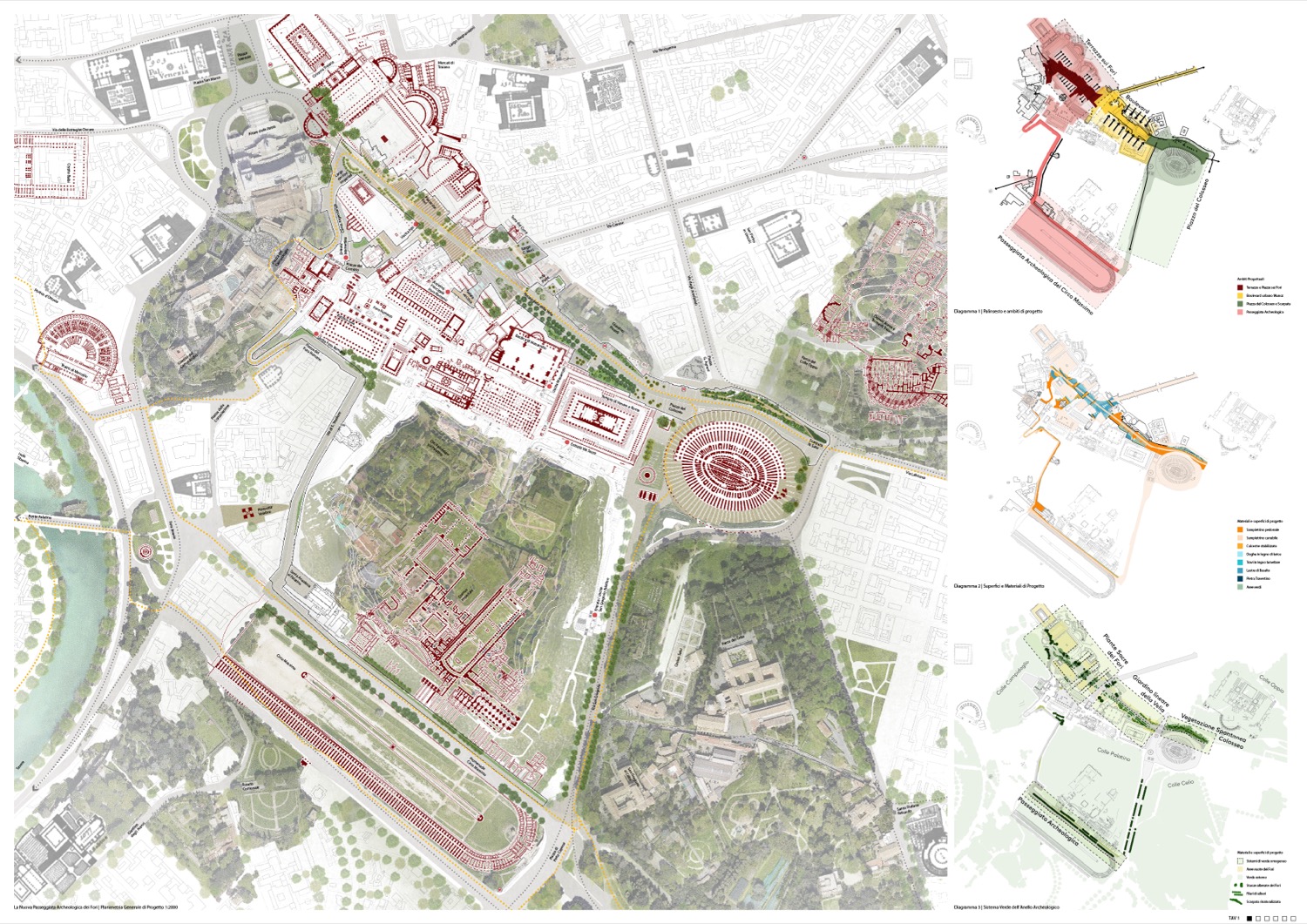
Archaeological Monumental Site (CARME) - Via dei Fori Imperiali area: enhancing the urban image of the archaeological ring

The intervention concerns the completion, enhancement and redevelopment of Via dei Fori Imperiali, with illustrative apparatuses, furnishings and works of art, to facilitate the use of services and accessibility to archaeological areas.

As per the "International design competition for the redevelopment of the Via dei Fori Imperiali area", the goal is to create a unified and identifiable image of the area, which also involves the pedestrian path of the so-called "archaeological ring". 

Among other things, the following are planned for design and installation: 

  • illustrative panels also through technological devices;
  • elements of street furniture such as litter bins, benches, planters and various other items;
  • inclusion of site-specific contemporary works of art;
  • equipment for the organisation of events and temporary exhibitions.