Roma Capitale
Ex Antiquarium Comunale cantiere

CULTURE

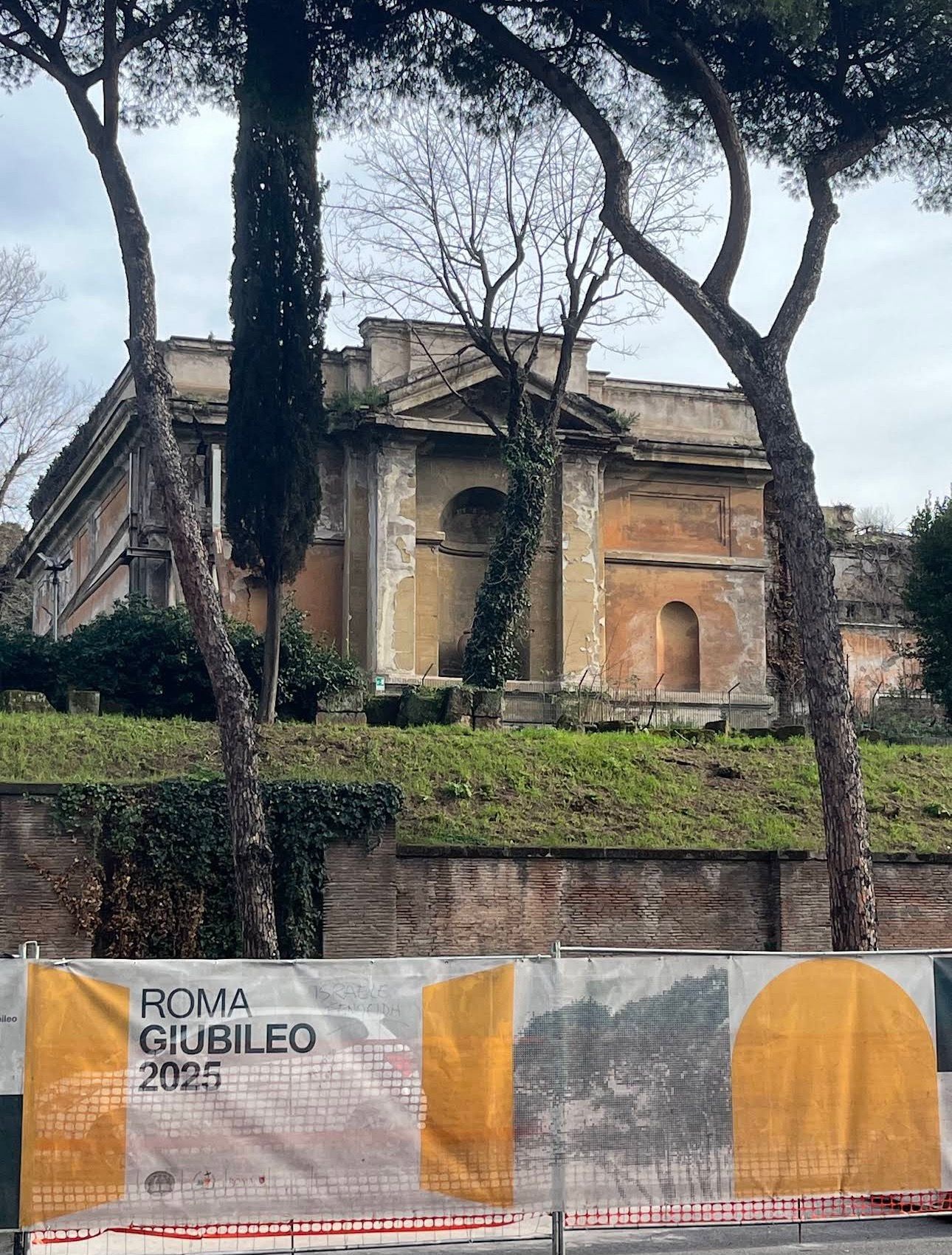
Caput Mundi: Former Municipal Antiquarium

The project is aimed at the restoration of the former Antiquarium, including the surrounding building and park. This space, in addition to playing an orientation role, can integrate the Central Archaeological Area within the urban structure of the modern city. An added value is the presence of a tram line that crosses the park, offering an environmentally sustainable way to connect the various museums along its route, from the Porta San Paolo Museum to the Villa Giulia Museum. Another objective of the enhancement initiatives is the expansion of the cultural offer, with exhibition spaces and information opportunities for visitors, useful to better understand and enjoy the city’s archaeological, artistic and historical heritage. The opportunity offered by the nearby exhibition space of the soon-to-open Celio Archaeological Park will be taken into account, with a view to creating an overall organic and harmonised service structure. The project involves the renovation, restoration and layout of the building and external area, in order to develop a new and significant cultural and tourist hub in the city. Specifically, the project involves the implementation of the following activities:

  • structural consolidation and demolition of non-repairable portions;
  • conservative rehabilitation and restoration;
  • technological systems;
  • energy efficiency interventions;
  • external interventions including clean-up of tree essences, cleaning of brambles and selection of typical Mediterranean and native essences;
  • handling of archaeological finds;
  • internal installations;
  • installations in the external area.
Roma Capitale
Cultura

CULTURE

Caput Mundi: Theatre of Marcellus

The project involves various activities, including conservative restoration, possibly accompanied by structural consolidation, lighting and video surveillance of the archaeological artefacts. New itineraries will be identified and created, together with related service structures. A lift for disabled people will be installed up to the upper ambulacrum, and new informative signs will be created. Archaeological investigations will be carried out, as well as specific consolidations and restorations on the masonry elements that require detachment interventions. The accumulation earth will be arranged and levelled, and walkways will be created to allow access above the archaeological remains. Ramps and connections will be built to overcome small differences in level and the stone artefact relating to the monument will be scenically set up, with extraneous ones removed. Adjustments and reorganisation of the ascent routes will be made, and the lighting system will be reviewed and adapted to current regulations to improve the transitability of the upper ambulacrum. The gates along the access ramp to the upper ambulacrum will be eliminated. In relation to the itinerary of Beatrice Cenci’s rooms, the reorganisation and rearrangement of the wooden coffers currently stacked outside will be carried out. Ceiling and mosaic will be adequately restored and illuminated. The wooden access ladders and balconies will be examined, consolidated and brought up to standard. The functioning of the existing lighting fixtures will be reviewed, with their possible replacement, and a safety lighting system will be created in all accessible spaces. Furthermore, interventions will be carried out to prevent birds from being able to access, such as the closure of gaps and openings through the application of anti-pigeon nets and the use of mechanical and electrostatic deterrents.


Roma Capitale
Cultura

CULTURE

Caput Mundi: Museum of Roman Civilisation

Interventions will be aimed at preserving the building organism while respecting the typological, formal and structural elements. It is planned to renovate the building's critical elements and restore the collection in order to create a new organic exhibition on Roman Civilisation. The interventions will be divided as follows:

  • Preservation of the building: completion of structural renovation works (completion of waterproofing of roofs, renovation of external cladding, renovation of all downspouts and drainage routes, installation of a protection system against rising infiltration, consolidation and renovation of floors where necessary, removal of asbestos components, replacement of all windows and doors, possibly including skylights, painting of the entire interior and exterior surfaces). Creation of an environmental mitigation system that can induce favourable environmental conditions for the conservation of the collection (Ministerial Decree 10/05/2001) and the well-being of workers and the public (Legislative Decree 81/2008);
  • Conservation of the collection: restoration of damaged works;
  • Enhancement: elaboration of an exhibition design on the basis of the museological project provided by the scientific management of the museum.

The project for the fitting out and overhaul of the museum's collection exhibition itinerary must include the restoration of the disused rooms, the creation of additional services for the public (bookshop, refreshment area), the restoration of damaged works, the fitting out of the library, the overhaul and integration of the working systems, an access system to the roofs of the north wing and walkways in compliance with standards for walkways on the roof level.

Roma Capitale
Cultura

CULTURE

Caput Mundi: Conservative restoration consolidation and enhancement of the Cistern of the Seven Halls

The main objective is to preserve the original architecture of the cistern, ensure structural safety and enhance its historical and artistic significance. Key phases of the project will include archaeological and geotechnical investigations and detailed surveys to gain a thorough understanding of the cistern. Consolidation work will be carried out on the wall structures to ensure the stability of the entire structure. In addition, decorative elements such as frescoes and sculptures will be restored to return the cistern to its original beauty. A roofing system will be built on the terrace and accessibility improvements will be made to allow more visitors to enter. Artistic lighting will be used to highlight characteristic aspects of the cistern, creating an atmospheric atmosphere. The ultimate goal of the project is to preserve the historical heritage and provide an engaging and informative experience for visitors, therefore contributing to the cultural and tourist enhancement of the area.

Roma Capitale
Cultura

CULTURE

Caput Mundi: Tomb of Priscilla: restoration and setting up of the farmhouses

The project includes a series of interventions aimed at improving and enhancing the area. Some of the main objectives include:

  • structural consolidation: measures will be taken to strengthen and consolidate existing structures, ensuring their stability over time;
  • conservative renovation and restoration of surfaces: repair and restoration works will be carried out on surfaces such as masonry and floors, with the aim of preserving their original appearance and historical integrity;
  • re-roofing of farmhouses 1 and 2: works will be carried out to replace or repair the roof of farmhouse 1, while the roof of farmhouse 2 will be overhauled or, if necessary, completely re-roofed;
  • sewerage system: a new sewerage system will be installed to ensure the correct disposal of waste water and to improve the general health and hygiene of the area;
  • overhaul/Renovation of technological systems: checks will be done to carry out the overhaul or renovation of the technological systems present in the area, such as the electrical or heating system;
  • fencing renovation: the fence will be replaced to ensure the delimitation and safety of the area;
  • educational setting up: spaces dedicated to educational equipment will be created, such as information panels, multimedia devices, or interactive installations, to offer visitors an engaging educational experience that facilitates understanding and appreciation of the area.

Through these interventions, the area will be preserved and enhanced, creating a safe, accessible, and informative environment for visitors.

Roma Capitale
Cultura

CULTURE

Caput Mundi: Archaeological area in Via Cilicia: restoration, consolidation and visit itinerary

The project focuses on the conservative restoration and enhancement of the archaeological area of Via Cilicia. Interventions of restoration, securing and consolidation will be made on the ancient structures in the area. The activities will aim to preserve and protect archaeological finds, allowing the access to visitors.In addition, a new lighting system of the area will be made, which will allow the access to the itinerary during night-time.
Archaeological excavations will be made in the area of Via Cilicia, in order to expand the knowledge of the site and enhance its value. Excavations could reveal new artefacts or historical information, which will contribute to the promotion of the site.
The ultimate goal of the project as a whole is to transform the area of Via Cilicia into an accessible, safe and pleasant place of cultural interest for visitors. Restoration and enhancement works will contribute to preserve the archaeological heritage and to offer a valuable experience to all visitors of the area.

Roma Capitale
Cultura

CULTURE

Recovery and upgrading of Villa Sciarra green spaces

The historical nature of Villa Sciarra calls for a conservative restoration project, aimed at recovering the architectural and landscape essence of the park, as well as enhancement interventions. The project relates to the landscape and vegetation redevelopment part, which is more specifically under the jurisdiction of the Environmental Protection Department. Interventions will be as follows:

  • Maintenance of paths and cliffs adjacent to flowerbeds;
  • Creation of new flowerbeds and paths as originally designed;
  • Bedding out of the palm trees in Viale Giuseppe Wern and in the flowerbeds in front of the Casino Nobile;
  • Installation of an irrigation system in the flowerbeds with turfs or with shrub-like plants and seasonal flowers;
  • Vegetation redevelopment: turfs and removal of cut logs;
  • Planting of flowering shrub-like species in the flowerbeds adjacent to the Casino Nobile;
  • Aviary upgrading;
  • Restoration of the outdoor spaces of the Bastion VII and creation of a new educational sensory garden within it.
Roma Capitale
Cultura

CULTURE

Caput Mundi: Villa Doria Pamphilj - Casale di Giovio: redevelopment of the systems through energy efficiency interventions and lighting enhancement

The project aims at protecting and preserving the Casale di Giovio. The building is characterised by a poor state of conservation and has several problems: damaged wooden door and front door, stormwater runoff, systems in poor conditions. The internal state of conservation still needs to be assessed. The intervention will include the following activities:

  • conservative restoration;
  • integration and modernisation of systems by prioritising eco-friendly solutions;
  • energy efficiency interventions;
  • lighting enhancement.
Roma Capitale
Cultura

CULTURE

Caput Mundi: Villa Doria Pamphilj - Villino Corsini: conservative restoration, system integration, lighting enhancement

The building shows signs of inadequate conservation, especially on its façade, on which plaster and decorative elements have detached from the upper terrace. The intervention will include the following activities:

  • conservative restoration and building renovation aimed at its enhancement (Art.36 NTA PRG);
  • integration of systems by prioritising eco-friendly solutions;
  • energy efficiency interventions;
  • lighting enhancement of the complex and the area concerned.
Roma Capitale
Cultura

CULTURE

Caput Mundi: Villa Doria Pamphilj - Villa Vecchia and Monument to the fallen French soldiers: restoration of the building and renovation of the exhibition space with lighting enhancement of the complex

The main objectives of the interventions aim at enhancing the historical building, which is part of the monumental complex of Largo di Vigna Vecchia, and preserving some important statue collections coming from the park of Villa Doria Pamphilj, currently housed in the Villa Vecchia Museum. Today, Villa Vecchia has an inadequate state of preservation. The main planned restoration interventions will include:

  • historical-stylistic restoration of the building;
  • renovation aimed at converting the building in an exhibition space open to the public;
  • integration and modernisation of systems by prioritising eco-friendly solutions and preserving the historical and artistic value;
  • energy efficiency interventions;
  • restoration of masonry damaged by humidity;
  • plastering and finishings restoration;
  • restoration of surrounding green areas;
  • lighting enhancement of the entire structure.