Digital Realty

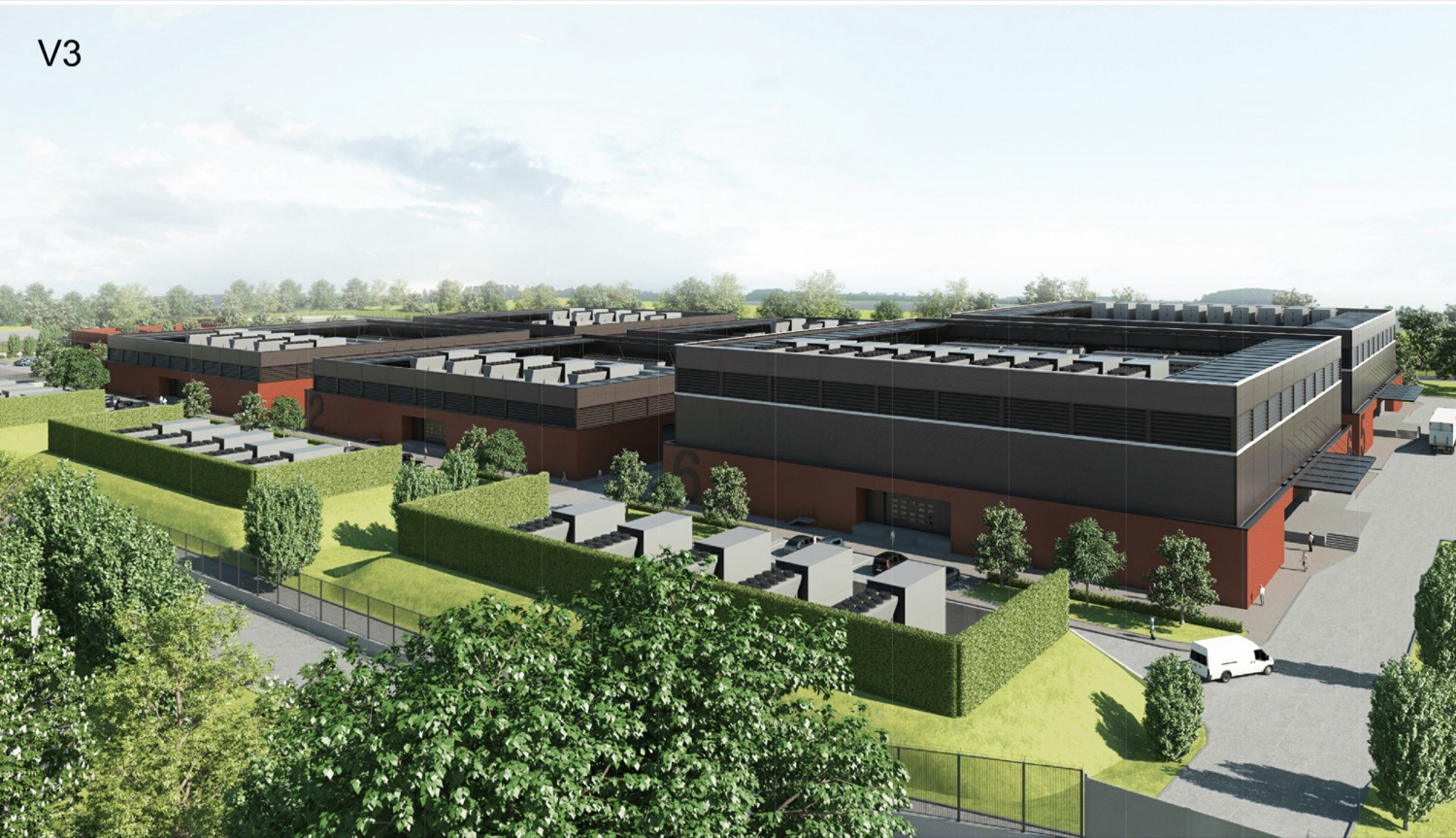
Render panoramico Data Center Digital Realty Testuggini

INNOVATION

Data Centre Digital Realty Via delle Testuggini - Trigoria

The Roma Capitale Council has approved the Reuse Plan of the former ACEA Management Centre, located on Via delle Testuggini in Rome Municipality IX, for transformation into a Data Centre. The project involves building a facility on an area of more than 150,000 square meters, which will include green spaces of more than 24,000 square meters and a pedestrian plaza of 14,000 square meters. The road system will also be adjusted, and more than 12,000 square meters of parking spaces will be built.

Conversion of the brownfield site will take place through partial renovation of existing buildings and limited reuse of the Gross Usable Area (GLA) for new facilities, without increasing cubage or further impacting the landscape. The intervention aims to redevelop the area, improve the existing technological infrastructure and enhance the surrounding environment. The new Data Centre will contribute significantly to job creation, both during the construction phase and in the operation of the centre, generating positive fiscal and economic impacts.

The creation of European-level digital infrastructure, through the conversion of disused sites such as the Acea Management Centre, not only promotes the city's urban development but also economic and employment growth. Such centres also increase the attractiveness of the city, making it more beneficial to major investment.

Roma Capitale
Infografica Stazione Venezia

SUSTAINABILITY

Metro Line C: Venezia Station

Metro Line C, Rome’s third underground line, provided for in the General Urban Development Plan and confirmed in the Sustainable Urban Mobility Plan approved on 13 December 2024 by the Metropolitan City of Roma Capitale, crosses the city from south-east to north-west, connecting distant urban areas and significantly expanding the existing underground network.

The line’s total route runs for approximately 29 km and counts 31 stations. It starts in the municipality of Monte Compatri, follows the route of the former Termini–Pantano railway line at surface level, then goes underground just before the Grande Raccordo Anulare ring-road. The line crosses the historic centre, Prati and Mazzini districts, to end at Farnesina district, after passing under the River Tiber three times. The system uses fully automated technology, with driverless trains and automatic doors separating the platforms from the tracks. Line C interchanges twice with Line A (at San Giovanni and Ottaviano stations), once with Line B (at Colosseo/Fori Imperiali station) and once with the regional railways (at Pigneto station).

The route is divided into several sections: T1, from Farnesina station to Mazzini station (excluding Mazzini station), currently in the design phase; T2, from Mazzini station to Colosseo/Fori Imperiali station (excluding Colosseo/Fori Imperiali station), currently under construction; T3, T4, T5, T6A and T7, from Colosseo/Fori Imperiali station to the Monte Compatri/Pantano terminus, plus the Graniti Depot/Workshop, already in service. This line C route division depends on the availability of funding and changes in the public procurement legislation.

The T2 section includes the functional Venezia – Colosseo/Fori Imperiali (excluded) sub-section, under construction from June 2023, and the Mazzini – Venezia (excluded) sub-section, under construction from February 2026. The section extends for a total of 4.5 km and includes 5 new stations. A 165,000 cubic-metre archaeological excavation will be carried out to build the 5 stations.

Construction of Section T2 began with the Venezia – Colosseum/Imperial Forums sub-section (excluded), comprising the tunnel section from Venezia station to the boundary of Section T3, which had already been excavated in September 2020 as part of the works for Section T3 (CIPE Resolution 76/2019). With regard to Venezia station, the final design and the related Financial Framework were approved by Order No. 3 of 30 December 2022 of the Government’s Special Commissioner for the construction of Line C, funded entirely by the State with funds allocated under Law No. 164 of 11 November 2014 and Law No. 234 of 30 December 2021. On 16 June 2023, following the approval of the detailed design, preparatory work began and the first construction sites were opened in Piazza Venezia and at the beginning of Via dei Fori Imperiali. The works are expected to take approximately 10 years.

As regards the remaining section of T2, the final design and the associated Financial Framework for the Mazzini – Venezia (excluded) sub-section, funded entirely by the State with funds allocated under Law No. 234 of 30 December 2021 and Law No. 197 of 29 December 2022. Following the decision by the funding bodies to construct the T2 section simultaneously with the T1 Farnesina – Mazzini (excluded) section, the Commissioner subsequently approved, by Order No. 12 of 30 December 2025, the final design for the variation to the Mazzini – Venezia (excluded) sub-section together with the final design for the T1 section, the

updated General Financial Framework for the project (including the T1 section), and the integrated construction schedule for the T1 and T2 sections.

Construction work on the Mazzini – Venezia (excluded) sub-section, following approval of the detailed design, started on 25 February 2026 with the fencing off of the areas around the Chiesa Nuova, Piazza Pia/Castel S. Angelo, Ottaviano and Mazzini stations. The works are expected to take approximately 10 years. The tunnels will be constructed following the start of works on the subsequent T1 section, after the TBMs (Tunnel Boring Machines) have been lowered into the ground via the shaft of the future Farnesina terminal station, proceeding from there to the Venezia station without interruption. 

At the Piazza Venezia construction site, both the TBMs coming from Farnesina and those that excavated the T3 section – which are currently stationary underground at the site of the future station – will be extracted.

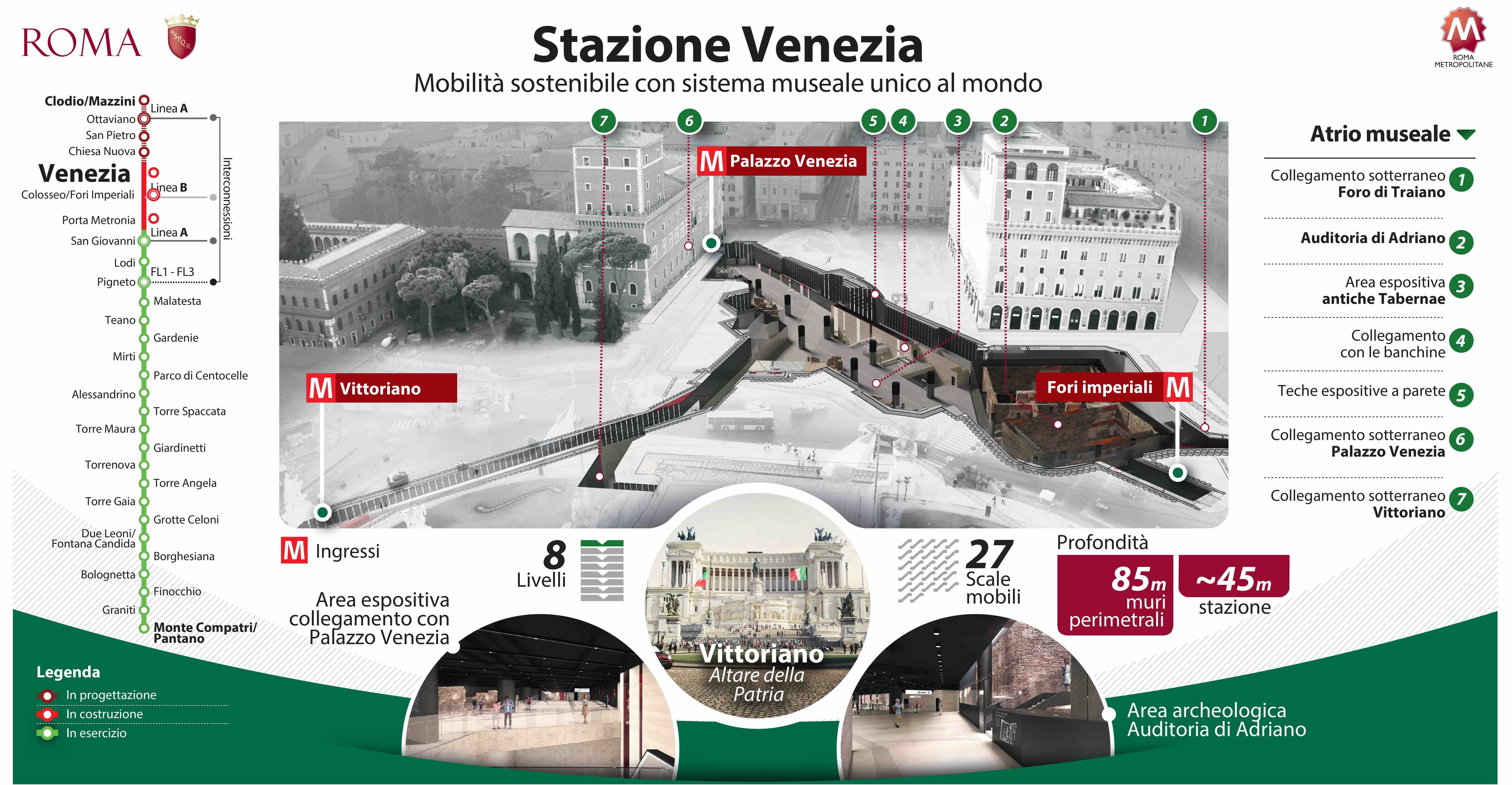
Venezia station is located beneath the square of the same name, with exits next to Palazzo Venezia and at the beginning of Via dei Fori Imperiali on the Trajan’s Forum side. A further exit at the beginning of Via del Teatro Marcello, next to the Vittoriano, will be connected to the station entrance hall by an underground passage. Venezia is one of the three archaeological stations on the T2 line (along with Chiesa Nuova and Piazza Pia/Castel S. Angelo stations) and will not only house, exhibition spaces for the artefacts and archaeological structures uncovered during the excavation on the entrance hall, but will also serve as a cultural hub thanks to underground connections to the basement of Palazzo Venezia, Hadrian’s University discovered in Piazza Madonna di Loreto, the Archaeological Park of the Forums and the Vittoriano Museum. The station lies 45 metres below street level.

The funding for Venezia station is included in the Economic Framework (Q.E.) for the Rome Metro – Line C, Section T2, amounting to €692,516,904.57, relating to the sub-section from Venezia station to Colosseo/Fori Imperiali station (excluded).

Click here for further details

Roma Capitale
Parco del Celio

SUSTAINABILITY

Environmental restoration and redevelopment of green areas in the Celio Park

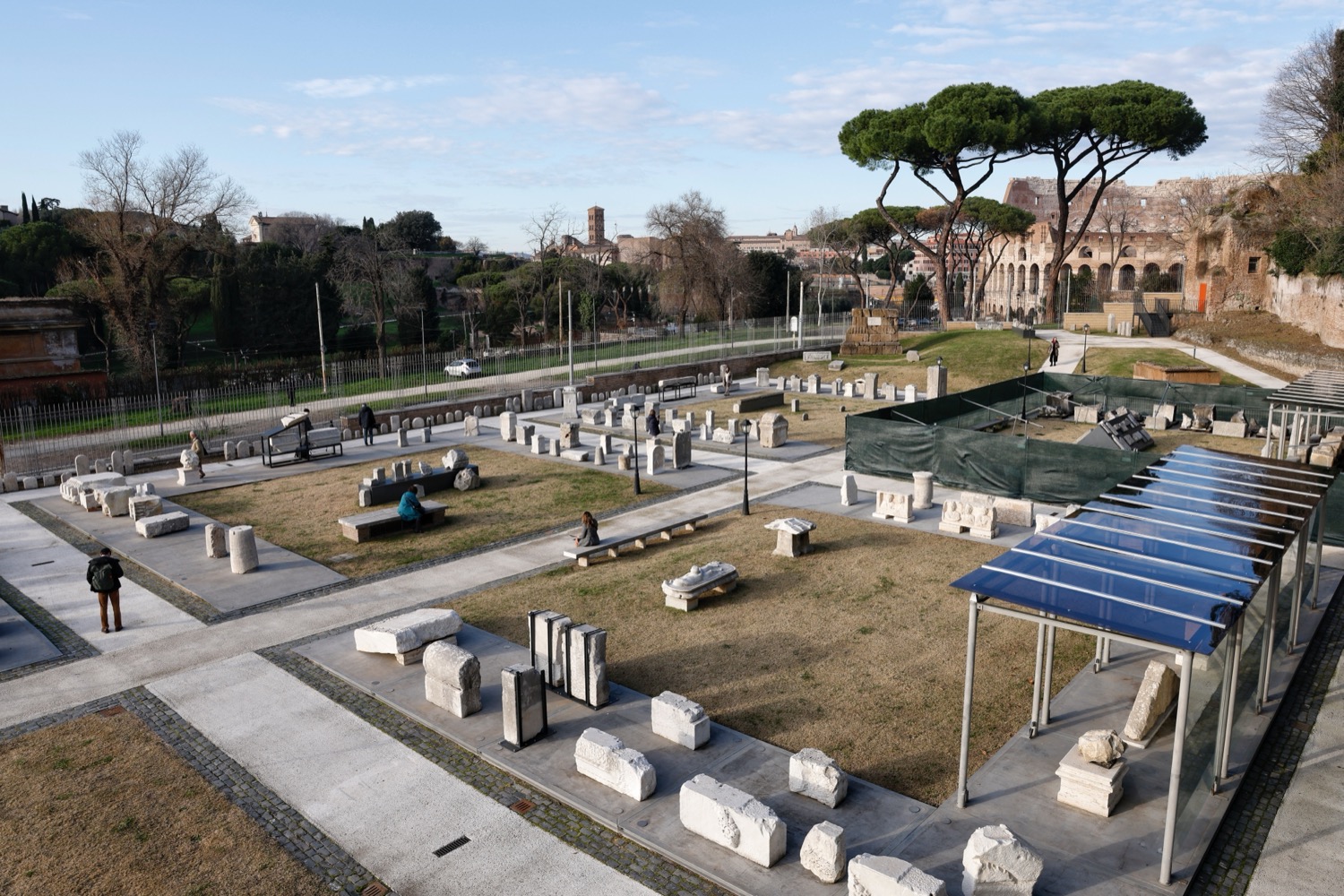
The Celio Park presents a marked lack of homogeneity with the surrounding area, in particular with the Colosseum Square and the Colosseum Archaeological Park. Its elevated position above the levels of the underlying streets, Via di San Gregorio and Via Celio Vibenna, creates a physical separation with the Colosseum Square and the surrounding green areas.

The main objective of the intervention is to promote a visual and landscape dialogue between the area of the Celio and the surrounding areas, with a particular focus on the Archaeological Park of the Colosseum and the Palatine, creating a real identity of the “Archaeological Park of the Celio”.

In the park, there are important archaeological areas such as the Claudium, the Casina del Salvi complex and the Antiquarium area, which are currently separated. The presence of these archaeological remains in a green setting with tall trees is evident. 

The study of historical cartography is essential to draw design inspiration from the Park's original vocation, which included functions such as a botanical garden and annexed vineyards. This historical research will help to restore shape and coherence to the Celio Park, harmoniously integrating the archaeological elements with the landscape context and promoting a more complete and meaningful use of the area.

Planned activities will include:

  • The removal of the asphalt currently present in the tram's driveway;
  • The redevelopment of the transit area of the Archeotram with a “naturalisation” of the area affected by the route by providing a “green” crossing;
  • The removal of the fence in the section in front of the Claudium area and the consequent spatial continuity with the area on the opposite side;
  • Selective reclamation of the vegetation on the slopes along Via Celio Vibenna;
  • The removal of the excessive number of oleanders covering an open panoramic view;
  • Planting shrubs from the rose family;
  • Planting shrubs of ancient tradition;
  • The arrangement of the vegetation on the site and the various areas present;
  • Plant stability analysis, VTA (Visual Tree Assessment) and instrumental;
  • The creation of an irrigation system along the areas affected by the new shrub plantations;
  • The creation of an area overlooking Via Celio Vibenna that would allow a wide view of the Colosseum area;
  • The installation of an iron railing along the entire stretch overlooking the slope that starts from Via di San Gregorio and continues in Via Celio Vibenna;
  • The creation of multifunctional communication routes between the various archaeological areas;
  • The lighting of the entire area through targeted and precise study;
  • The provision of a sinusoidal path, in stabilised earth, also suitable for people with disabilities. 

The estimated cost of the work, according to the first financing, pursuant to Prime Ministerial Decree 08/06/2023, allocated in the Jubilee programme, was € 2,440,000.00 (VAT included). It was necessary to increase the initial amount by a further € 200,000.00, for a total amount of the loan of € 2,640,000.00. The objective is to allow the construction of the irrigation system of the Park through a new water supply system through storage tanks, following the findings of joint inspections with ACEA Ato 2 and the Department of Infrastructure and Public Works regarding the decommissioning of the section of the municipal irrigation network concerned by the intervention.

Roma Capitale
Render Aranciera di San Sisto

SUSTAINABILITY

Redevelopment of the San Sisto Orangery

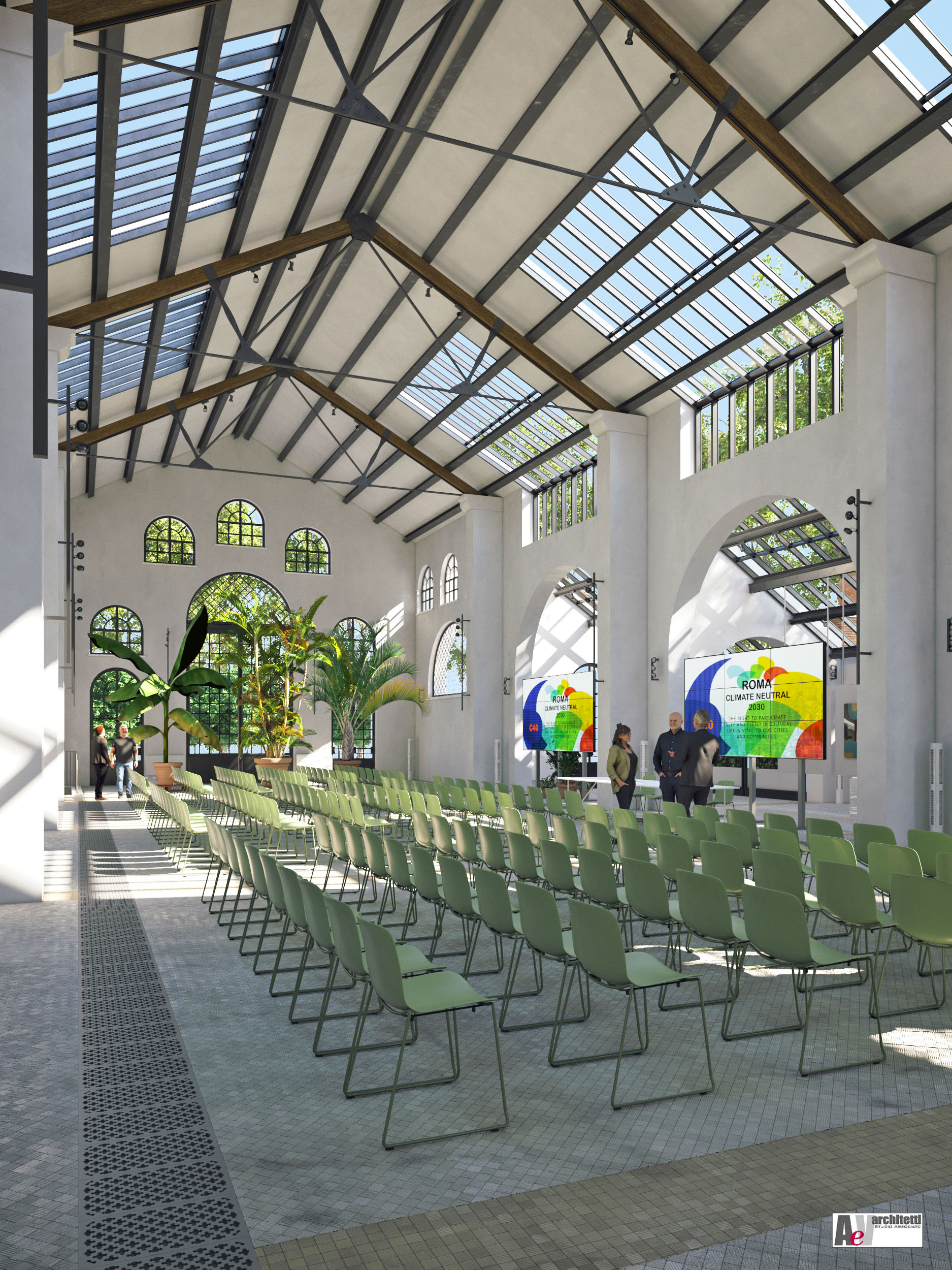
The San Sisto Aranciera is a monumental greenhouse designed by the architect Raffaele de Vico in 1926 for housing the Department of Environmental Protection plants.  

The redevelopment project aims to achieve structural consolidation and energy efficiency for the building. Technologies and targeted solutions will be applied in order to preserve its original appearance while making it a multifunctional space. 

The project will adopt passive energy strategies for climate control of the building, integrated with an innovative photovoltaic system, a geothermal system, an air purification system through plants, and a  water recovery and recycling system. The restoration of the Aranciera will thus become a virtuous and potentially reusable design model, even in other buildings owned by the Municipality of Rome. 

Roma Capitale
Aree ludiche e sportive

SUSTAINABILITY

Extraordinary maintenance of recreational and sports areas

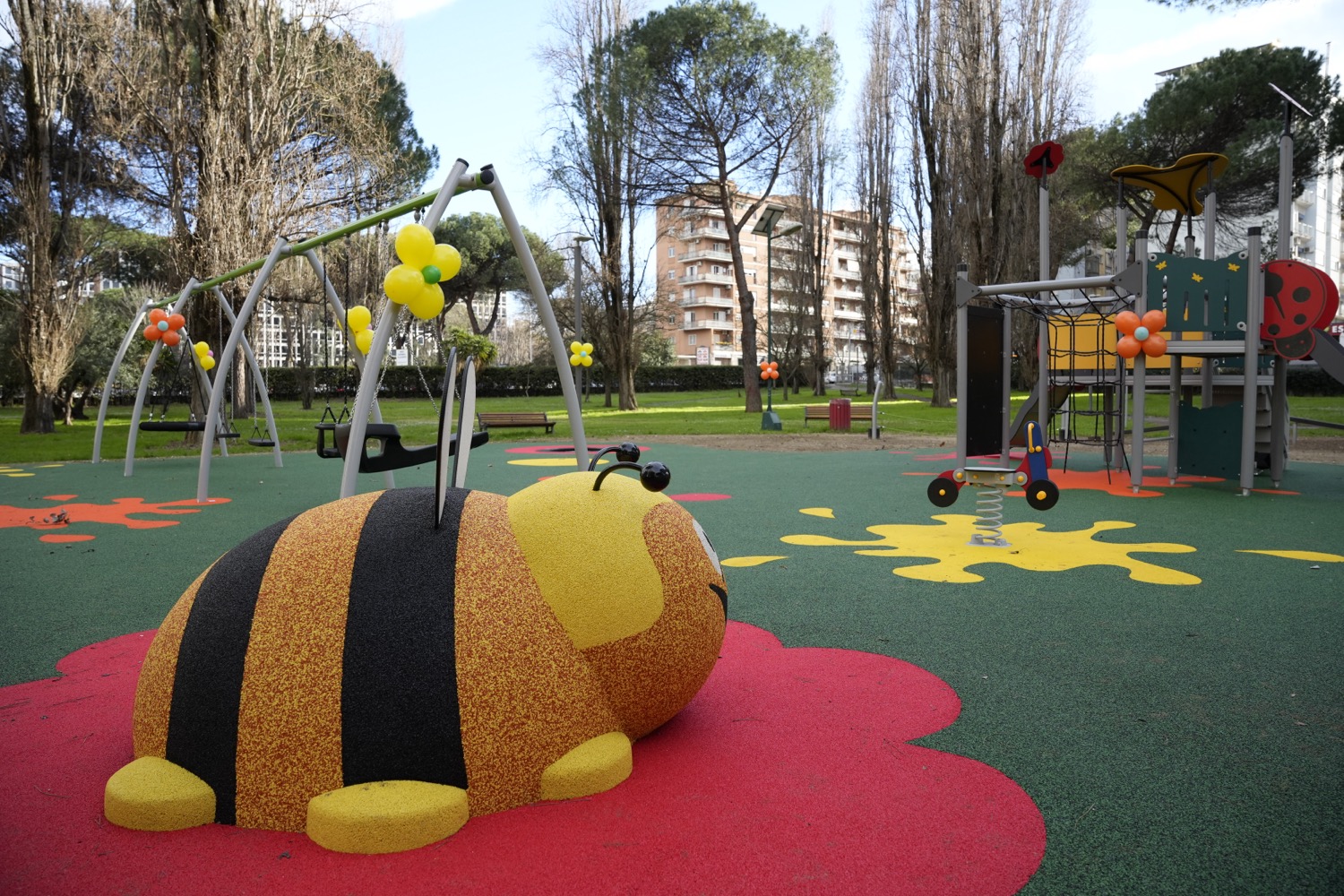
The project includes the removal of non-standard play and fitness areas and the consequent construction of new facilities with inclusive equipment and anti-trauma flooring where provided.

Extraordinary maintenance of existing multi-purpose fields will be included in the activities.

Roma Capitale
Sostenibilità

SUSTAINABILITY

Restoration and redevelopment of Casale della Vaccareccia in the Caffarella Park

The project aims at the restoration and redevelopment of the “Casale della Vaccareccia” Complex within the Caffarella estate. The conservative interventions will focus on the preservation of the masonry and the conservation of the buildings, with the aim of allowing a new usage of the site. The design approach will include the creation of new social and gathering spaces, harmoniously integrating them with the surrounding natural environment.

The complex, as part of the Appia Antica Regional Park, consists of four total buildings, three of which are accessible from a large triangular-shaped perimeter area and the last one is detached. 

Planned activities will include:

• classrooms, conference room and guest quarters in the Casale;

• refreshment point, reading and game room, and bar/ice-cream parlour in the Large Stable;

• rooms for temporary exhibitions and educational workshops in the Small Stable;

• environments for dairy production and sales point in the Barn.

CASALE

The aim of the Casale re-functionalisation project is to convert the spaces into an exhibition, educational, and conference centre on the ground floor and the volume surrounding the tower, while the second floor will serve as guest quarters. The connection between the floors will be provided by a restored staircase, a new lift and a panoramic metal walkway, allowing views of the archaeological basins and historical elements. 

The medieval tower will be enhanced through a partially transparent roof, showing its original height. The structural interventions will include the construction of an aerated floor, various wall repairs, the insertion of new structures such as a staircase and lift, the placement of structural reinforcements and the creation of a glazed roof. The restoration will involve the exterior and interior surfaces, flooring, plaster, windows, and the redevelopment of the underlying caves, allowing for different intended uses.

THE LARGE STABLE 

The Large Stable has suffered a significant deterioration in its state of preservation, including the complete collapse of the roof. Although the considerable size of the building helped to preserve it from local or general collapse, prolonged exposure to the atmospheric agents caused significant damage to the historical plaster and the complete deterioration of the windows. In order to solve these problems, architectural, structural and restoration interventions have been planned aimed at restoring all the spaces. In particular, there will be the construction of a refreshment room, a reading room and a bar, as well as spaces for distribution services. The new roof will be built with a steel structure, supported by an external pitch roof made up of photovoltaic panels, which will be integrated into the surrounding landscape.

The main phases of the intervention will include the creation of a basin to collect water, the construction of an aerated floor, the reclamation of the masonry with injections of a natural hydraulic lime-based mixture, the rebuilding of the roof with new steel beams and corrugated sheet metal, the thermal insulation of the roof, waterproofing, and the installation of a photovoltaic plan.

In addition, interventions such as the renovation of existing exterior plaster, the rebuilding of interior plaster and windows, and the construction of new flooring, false ceilings and insulating walls will be planned to improve overall energy efficiency. 

It is planned, in order to improve the accessibility to the complex, to resurface the dirt road leading to the rear of the barn, through the use of a beaten surface similar to those found in the park. The creation of a parking area behind the barn for staff, loading/unloading of goods and charging stations for electric vehicles will be proposed. 

THE BARN 

The barn building underwent several interventions in the period from 2013 to 2016, and is currently in good structural condition. The interventions carried out include the reintegration of the tuff bank in the lacunae areas through the use of tuff blocks and widespread injections, the binding at the level of the tuff bank using dywidag bars positioned on the internal masonry half pilasters, the reconstruction of the reinforced masonry buttresses on the front rear, the protection of the compromised tuff bank, the creation of a aerated floor, seams in aramid-fibre bars in the walls, the renovation of the walls with a mixture based on natural hydraulic lime and the reconstruction of the roof with recovered wooden elements.

Further interventions include the top confinement to ensure a unified appearance of the building, the construction of a metal curb to protect the walls, the construction of a mixed intermediate floor in steel and corrugated sheet metal, the construction of internal partitions, stairs and counterframes for retractable doors. The interior finishes, installations, accesses and fixtures remain to be completed, as well as the consolidation of external plaster fragments and the cleaning of surfaces with new stains.

The redevelopment project involves the establishment of a dairy production activity and a retail point, complete with services and facilities for the enjoyment of the spaces. The restoration will include the recovery of external plasterwork, the creation of internal plasterwork in the production area, new differentiated floorings, the restoration of external surfaces, a naturalistic staircase for access to the retail point, and the restoration of the adjacent road surface. Additionally, there is a plan for an external metal walkway to provide independent access to the retail point and the production area, ensuring accessibility for people with disabilities.

 OUTDOOR SPACES

The outdoor spaces of the complex include the large triangular terrace overlooking the valle della Caffarella, providing access to the Casale, the Large Stable, and the Small Stable. Furthermore, there is a cobbled pathway that separates the Small Stable from the Barn, a parallel path running upstream from the Large Stable to the Farmhouse, the area in front of the Barn, and the northern access road that reconnects the complex to the Via della Caffarella. Currently, the terrace is not paved, but porphyry cube sidewalks have been identified just below the surface, now completely overrun by vegetation. 

There are plans to create specific beaten paths with water-permeable tuff on the terrace, leaving the rest of the space green, with small areas designated for bicycle racks to promote sustainable mobility The pathway between the Small Stable and the Barn will be cleaned, with joint grouting and the emptying or replacement of drainage channels The path upstream of the Large Stable will be restored to its original level with a stabilized earth pavement, accompanied by a fence on the uphill side to contain soil erosion from the hill. Finally, the square and the connecting road to the north with Via della Caffarella will be repaved with stabilised earth, and electric charging columns will be installed in the square.

Anas
Sostenibilità

SUSTAINABILITY

Extraordinary maintenance of the main access road network: maintenance and modernisation of technological systems

The proposed intervention relates to the resurfacing of the main roads called "vie Consolari", conducted by ANAS S.p.A. By means of an agreement, the company will be responsible for drafting, approving and implementing the projects with the support of Roma Capitale and Città Metropolitana. The work will be carried out at night, between 9 p.m. and 6 a.m., following a precise timetable in order to limit the inconvenience to citizens and to ensure traffic flow on the roads affected by the works.

The maintenance of street lighting systems involves the repair and replacement of components that have suffered, for example, the effects from wear and tear, atmospheric agents (snow, ice) as well as the passage of time. 

These works will be carried out without interfering with the maintenance activities managed by the public lighting service.

The roads affected by the intervention are: 

Via Ardeatina; Via del Divino Amore; Via Laurentina; Via Nomentana; Via Ostiense; Via Portuense; Via Prenestina; Via Prima Porta Sacrofano; Via Tuscolana; Via Del Mare; Via Dei Laghi; Via Tiberina; Via di Santa Maria Galeria; Via Boccea; Via Della Pisana; Viale Della St. Di Cesano; Viale Di Baccanello; Via Casal Di Selce; Via di Donna Olimpia; Via di Ponte Galeria; Via Trionfale; Via Salaria; Via Casal Boccone; Via Casale San Basilio; Via di Tor Cervara; Via Braccianese; Via Collatina; Via della Storta; Via delle Capannelle; Via Anagnina; Via Appia Nuova; Via della Cecchignola; Via di Grotta Perfetta; Via di Vigna Murata; Tangenziale Est – Olimpica; Via Cristoforo Colombo; Via dei Fiorentini; Viale delle Belle Arti; Viale Regina Elena; Viale Liegi; Viale Regina Margherita; Via Leone XIII; Via Dei Colli Portuensi; Via Della Camilluccia; Via Di Portonaccio; Sacrofanese- Cassia; Pratica di Mare – Ostia.

Anas
Sostenibilità

SUSTAINABILITY

Extraordinary maintenance of the main access road network: restoration of the Tiburtina Ring Road Flyover

The proposed intervention relates to the resurfacing of the main roads called "vie Consolari", conducted by ANAS S.p.A. By means of an agreement, the company will be responsible for drafting, approving and implementing the projects with the support of Roma Capitale and Città Metropolitana. The work will be carried out at night, between 9 p.m. and 6 a.m., following a precise timetable in order to limit the inconvenience to citizens and to ensure traffic flow on the roads affected by the works.

The project, which is aimed at restoring the safety standards of the Tiburtina ring road, includes the restoration of the protection of the metal carpentry, the waterproofing of the slab, the renovation of the flooring, the replacement of damaged joints and the improvement of the platform water disposal system. The ring road, in addition to connecting the district of S. Lorenzo to Viale Castrense and Via Prenestina, is an essential link to the A24 Parks Motorway.

Anas
Sostenibilità

SUSTAINABILITY

Extraordinary maintenance of the main access road network: redevelopment of the horizontal and vertical signage including lights, marginal and complementary

The proposed intervention relates to the resurfacing of the main roads called "vie Consolari", conducted by ANAS S.p.A. By means of an agreement, the company will be responsible for drafting, approving and implementing the projects with the support of Roma Capitale and Città Metropolitana. The work will be carried out at night, between 9 p.m. and 6 a.m., following a precise timetable in order to limit the inconvenience to citizens and to ensure traffic flow on the roads affected by the works.

Maintenance works are aimed at adapting the road signs to comply with the current regulations. The damaged panels and supports will then be replaced, the missing road signs and pedestrian crossings will be integrated with sequential flashing lights and retro-reflective supplementary devices, and non-compliant panels will be removed.

The roads affected by the intervention are:

Via Ardeatina; Via del Divino Amore; Via Laurentina; Via Nomentana; Via Ostiense; Via Portuense; Via Prenestina; Via Prima Porta Sacrofano; Via Tuscolana; Via Del Mare; Via Dei Laghi; Via Tiberina; Via di Santa Maria Galeria; Via Boccea; Via Della Pisana; Viale Della St. Di Cesano; Viale Di Baccanello; Via Casal Di Selce; Via di Donna Olimpia; Via di Ponte Galeria; Via Trionfale; Via Salaria; Via Casal Boccone; Via Casale San Basilio; Via di Tor Cervara; Via Braccianese; Via Collatina; Via della Storta; Via delle Capannelle; Via Anagnina; Via Appia Nuova; Via della Cecchignola; Via di Grotta Perfetta; Via di Vigna Murata; Tangenziale Est – Olimpica; Via Cristoforo Colombo; Via dei Fiorentini; Viale delle Belle Arti; Viale Regina Elena; Viale Liegi; Viale Regina Margherita; Via Leone XIII; Via Dei Colli Portuensi; Via Della Camilluccia; Via Di Portonaccio; Sacrofanese- Cassia; Pratica di Mare – Ostia.

Working site considered partially closed and operating at the beginning of the Jubilee Year.

Roma Capitale
Sostenibilità

SUSTAINABILITY

Roads Plan: maintenance of the main road system of Roma Capitale

Roma Capitale is allocating approximately 800 million euros to upgrade the main road. This is being financed through a combination of Jubilee funds, the Roma Capitale budget and other state funding sources. 

The Jubilee has allocated a 329 million euros for the main road system, with 102 million euros of this sum provided by the Ministry of Infrastructure and Public Works (47 for residential roads with the intervention Extraordinary maintenance of the main road network; 31 millions for historical pavings with the interventions Via Giulia RedevelopmentRedevelopment of historical paving: extraordinary maintenance of Via Crescenzio and Via Cola di Rienzo, Redevelopment of historical paving: extraordinary maintenance of bituminous conglomerate roadsRedevelopment of historical paving: transformation of the roadway from cobblestone to bituminous conglomerate and vice versaRedevelopment of historical paving: extraordinary maintenance of cobbled roads and Redevelopment of historical paving: extraordinary maintenance of paving in front of Jubilee churches; 14 millions for Lugotevere roads and bridges with the interventions Extraordinary maintenance and resurfacing of Lungotevere and its bridges. Redevelopment of pavements on the right bank and Extraordinary maintenance and resurfacing of Lungotevere and its bridges. Redevelopment of pavements on the left bank; 10 millions for the pavings with the interventions Extraordinary maintenance of pavements on main roads: Historic District and Extraordinary maintenance of pavements on main roads: Consolidated City, City of Restructuring and City of Transformation) and 227 millions allocated by Anas. The remaining part is financed by municipal budget funds and state funding.

The main road system, where most of the city's traffic passes through, is managed directly by the Department of Infrastructure and Public Works, starting from November 2021, has created the Piano Strade plan that aims to the thorough upgrading of more than 700 main roads, totalling 800 km. The plan is implemented with mostly nocturnal construction sites, to reduce the impact on city life. 

As of December 2024, about 70% of the roads have already been redeveloped, for over 600 km of the main road system, with an expenditure of over 300 million euros. Among the most significant interventions, the Department of Infrastructure and Public Works has completed a major unfinished task: the adaptation and enlargement of Via Tiburtina to the G.R.A., a project that has been awaited for 19 years.

The following list concerns the interventions already carried out from November 2021 to December 2024:

Viale Angelico; Viale Guido Baccelli; Via Barletta; Via dei Cerchi; Piazza di Porta Capena; Via del Tritone; Sottovia Ferroviario Turbigo; Ponte Risorgimento; Piazzale delle Belle Arti; Viale La Guardia Fiorello; Circonvallazione Nomentana; Via S. Paolo del Brasile; Via Tiburtina; Piazzale Tiburtino; Viale Tiziano; Viale Washington Giorgio; Via Flaminia; Piazzale Stazione Tiburtina; Cavalcavia di Via Nomentana; Via Ojetti Ugo; Via dei Prati Fiscali; Ponte di Via Salaria; Via Tiburtina; Viale Togliatti Palmiro; Viadotto di Via Palmiro Togliatti; Viale della Serenissima; Via Tor De' Schiavi; Via di Tor Bella Monaca; Via di Torre Spaccata; Viale Castrense; Via Nola; Via Matteucci Pellegrino; Viale del Tintoretto; Via Ardeatina; Via Ostiense; Ponte Marconi; Viale Egeo; Piazza Marconi Guglielmo; Via delle Tre Fontane; Viale di Val Fiorita; Viale dell’astronomia; Piazzale Parri Ferruccio; Viale Tupini Umberto; Via Simone De Saint Bon; Via Laurentina; Cavalcavia Via Cristoforo Colombo; Cavalcavia Via Elio Chianesi; Sottopasso di Via Bruno Brandellero; Viadotto di Via Cristoforo Colombo; Via Cristoforo Colombo; Via della Magliana;  Viadotto Zelia Nuttal; Rampe di accesso al Viadotto Zelia Nuttal; Viadotti Ciclabili Via Ruspoli; Lungotevere degli Inventori; Viale Marconi Guglielmo; Piazza Meucci Antonio; Via Oderisi da Gubbio; Via del Trullo; Svincoli di Via Portuense con Via Isacco Newton; Via di Bravetta; Via della Casetta Mattei; Via della Maglianella; Viale Newton Isacco; Via Anastasio II; Via Pineta Sacchetti; Via S. Cleto Papa; Via di Torrevecchia; Via Cassia; Via Cassia Nuova; Via Flaminia; Piazza dei Giuochi Delfici; Lungotevere Maresciallo Cadorna; Piazzale Di Ponte Milvio; Via di Corso Francia; Viadotto di collegamento tra Via Flaminia Vecchia e Via dei Due Ponti; Via della Camilluccia; Via della Giuliana; Piazza di Porta S. Giovanni; Piazza di S. Giovanni in Laterano; Piazzale dello Stadio Olimpico; Viale dello Stadio Olimpico; Lungotevere dell’acqua Acetosa; Viale Eritrea; Viale Libia; Via Lucrino; Corso Trieste; Viale Jonio; Via dei Monti Tiburtini; Viale Jonio; Via Casilina; Viale della Primavera; Via del Ponte Di Nona; Via dell'arco Di Travertino; Via di Fioranello; Via di Decima; Piazza Marconi Guglielmo; Viale Oceano Atlantico; Piazzale Venticinque Marzo 1957; Viale dell’astronomia; Via Chopin; Via Liszt; Radio (Piazza della); Piazza Righi Augusto; Via Rolli Ettore; Via degli Stradivari; Via Usini; Via Anastasio II; Circonvallazione Aurelia; Circonvallazione Cornelia; Piazza Giureconsulti; Via Tardini Domenico; Via Battistini Mattia; Via Chiesa Damiano; Via Marziale; Viale dei Monfortani; Via Montiglio Vittorio; Via Pestalozzi Enrico; Via Pineta Sacchetti; Via S. Cleto Papa; Piazza Giovenale; Via Civita Castellana; Piazza De Bosis Lauro; Via Flaminia; Via Lupi Pietro; Largo Maresciallo Diaz; Lungotevere Maresciallo Diaz; Via Riano; Viale Tor di Quinto; Viale Tor di Quinto; Borgo Pio; Via dei Corridori; Borgo Sant'angelo; Via Rusticucci; Via dell'erba; Vicolo dell'inferriata; Vicolo del Campanile; Via Giulia; Via Portico d'Ottavia; Via della Lungara; Via Teatro Marcello; Via Luigi Petroselli; Via Bocca Della Verità; Via San Teodoro; Via del Foro Romano; Via San Bonaventura; Via dei Vecchiarelli; Via Clivio dei Publicii; Via Crescenzio; Via Boezio; Via delle Grazie; Via Vitelleschi Giovanni; Via Stefano Porcari; Via di Porta Castello; Via Alberico II; Via Francesco Cancellieri; Via Gracchi; Via Terenzio; Via Ovidio; Via Orazio; Via Cicerone; Via Virgilio; Viale Glorioso; Via Nicola Fabrizi; Via Calandrelli; Via Plinio; Via Valadier; Via Ennio Quirino Visconti; Via Marianna Dionigi; Via Vittoria Colonna; Via Properzio; Via Tibullo; Via Catullo; Via Giuseppe Gioacchino Belli; Via del Porto; Piazza di Porta San Paolo; Via Marmorata fino a Via Galvani; Viale Piramide Cestia; Piazza Pietro D'Illiria; Via dell'ara Massima Di Ercole; Via del Falco; Piazza Basilica di Santa Maria Maggiore; Piazza Basilica di San Paolo Fuori Le Mura; Piazze Chiesa Nuova e Santa Maria In Vallicella; Piazza San Salvatore In Lauro; Piazza dell'oro; Chiesa San Giovanni Battista dei Fiorentini; Banco di Santo Spirito (Via); Basilica Santi Celso e Giuliano; Lungotevere delle Armi; Lungotevere Michelangelo; Lungotevere dei Mellini; Lungotevere Prati; In Sassia; Lungotevere Gianicolense; Lungotevere Farnesina; Lungotevere Raffaello Sanzio; Lungotevere degli Anguillara; Lungotevere dei Pierleoni; Lungotevere De' Cenci; Lungotevere dei Vallati; Lungotevere dei Tebaldi; Lungotevere dei Sangallo; Lungotevere dei Fiorentini; Lungotevere degli Altoviti; Lungotevere Tor di Nona; Lungotevere Marzio; Lungotevere in Augusta; Lungotevere Arnaldo da Brescia; Lungotevere delle Navi; Ponte Giacomo Matteotti; Ponte Regina Margherita; Ponte Umberto I; Ponte Vittorio Emanuele II; Ponte Giuseppe Mazzini; Ponte Garibaldi; Ponte Palatino; Lungotevere Testaccio; Viale di Trastevere; Corso d’Italia; Lungotevere Salvo d’Acquisto; Lungotevere Thaon De Revel; Via Flaminia; Via Camerata Picena; Via Monte Urano; Via Morro d'Alba; Via Rapagnano; Viale Tirreno; Viale Togliatti Palmiro; Piazza delle Camelie; Via Casilina; Via di Tor Pignattara; Via di Porta Furba; Via Cilicia; Via Dell'almone; Via Di Casal Rotondo; Viale Spalla Erminio; Via Acqua Acetosa Ostiense; Via dell'atletica; Via Castel di Leva; Via del Pattinaggio; Via di Tor Pagnotta; Corso di Francia; Viale Tor di Quinto; Via Parigi; Via Pastrengo; Viale Maresciallo Pilsudski; Piazzale Parco della Rimembranza; Viale dei Parioli; Via Salaria; Via di Casal Boccone; Via del Casale Di S. Basilio; Via di Tor Cervara; Via Casilina; Via Tuscolana; Via Ponte Galeria; Via di Malagrotta; Via di Casal Selce; Via di Boccea; Via Casal del Marmo; Via della Storta; Via della Pisana; Via Portuense; Via Flaminia - Villa Livia; Via Quattro Venti; Via Salaria; Via Nomentana; Via di Casal Boccone; Via di Casale San Basilio; Via Fiorentini Filippo; Via di Portonaccio; Via Collatina; Via Prenestina; Via del Divino Amore; Via Anagnina (Via); Via Appia Nuova; Via delle Capannelle; Via Tuscolana; Via di Grotta Perfetta; Via Laurentina; Via Ardeatina; Via della Cecchignola; Via Laurentina; Via di Vigna Murata; Via Colombo Cristoforo; Via Portuense; Viale dei Colli Portuensi; Via di Donna Olimpia; Via Leone XIII; Via di Boccea; Largo Trionfale; Via Trionfale; Via di Santa Maria Galeria; Via della St. Di Cesano; Viale di Baccanello; Via di Prima Porta Sacrofano; Tangenziale Est-Olimpica; Via della Camilluccia; Via Sacrofanese-Cassia.